
Content
Ideal Body Composition
2 Feb 2026
3 Min Read

“Have you ever stood in front of the mirror after a workout and felt that some parts of your body still look bloated or thicker in certain areas, making you feel that your body is not ideal? So, what exactly is the benchmark of ideal body composition? Let’s discuss it together in this article.”
Measuring body composition is like assessing the body based on the categories of its components: muscle, fat, organs, and water.
By knowing our body composition, it becomes easier to observe changes in our body weight. We can identify in detail which parts of the body are decreasing or increasing. We can also determine whether weight loss is caused only by water loss (such as dehydration) or truly by the reduction of accumulated body fat.
Why do we need to analyze body composition?
If we want to achieve an ideal body, we cannot rely solely on a weighing scale or just calculate our Body Mass Index (BMI).
This can lead to misunderstandings about our own body. A normal BMI does not necessarily reflect an ideal body composition.
This is because someone with a normal BMI may still have an imbalanced body composition. For example, excessive body fat and very low muscle mass.
This misconception causes some people to believe that the skinnier they look, the healthier they are. In fact, that is not always true, as their muscle mass may not be sufficient to store energy reserves and protein needed to support the overall functioning of the body’s cells.
So, how can we find out our body composition?
Today, there are many body composition measuring devices available on the market with various brands. Advances in technology have made body composition measurement much easier.
Body composition analyzers can now even be used by the general public at home, so there is no need to measure body composition in hospitals or clinics.
These devices automatically detect body fat percentage, skeletal muscle mass, visceral fat (central fat), and total body water composition.
When is our body considered ideal?
Below are some normal values for body composition measurements:
1. Body Fat Percentage
A person is considered to have an ideal or lean body if their body fat percentage is between 10–20% for men and 18–28% for women.
Women generally have more body fat due to the influence of estrogen hormones, which are higher compared to men.
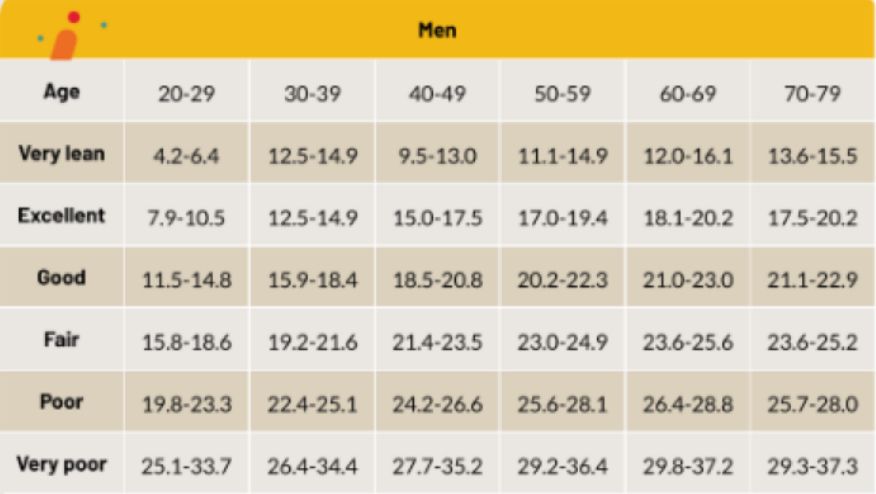
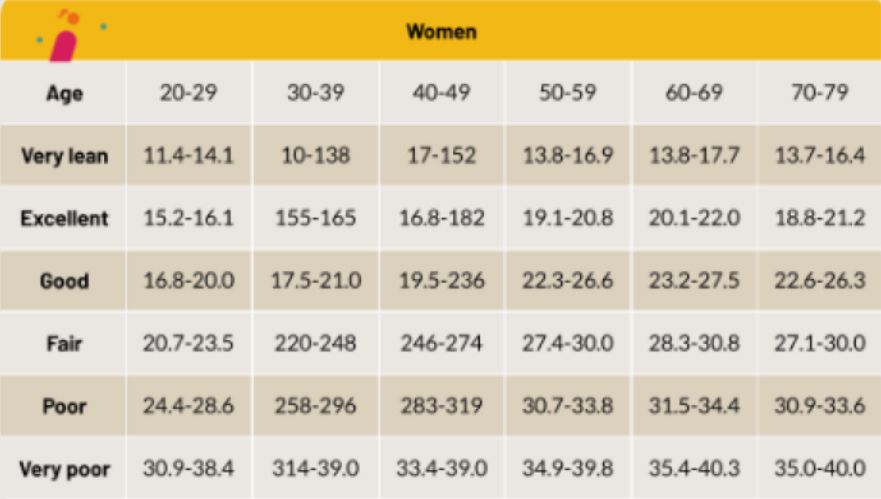
The American College of Sports Medicine classifies body fat percentage as follows:
2. Skeletal Muscle Mass
As time goes by, muscle mass decreases, making older adults find it difficult to perform activities such as walking, running, or climbing. This condition is known as sarcopenia.
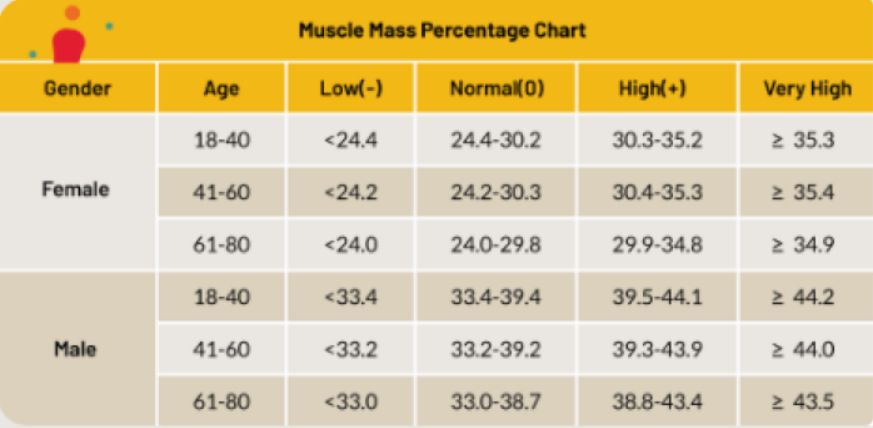
A person’s muscle mass depends on their fitness level, gender, and age.
Below is a table of normal ranges for skeletal muscle mass:
3. Waist Hip Ratio and Visceral Fat
This measurement is conducted to assess whether a person has central obesity.
Central obesity describes the excessive amount of fat surrounding a person’s internal organs (visceral fat). It indicates a higher risk of developing metabolic syndrome. This condition includes high blood pressure, excess abdominal fat, and increased levels of blood sugar, cholesterol, and triglycerides.
This measurement is done by comparing a person’s waist circumference to their hip circumference. A ratio above 0.9 for women and above 0.95 for men indicates high visceral fat levels and a greater risk of metabolic syndrome.
So, looking skinny does not always mean having an ideal body, and having a normal BMI does not necessarily mean having an ideal body composition.
Let’s analyze your body composition now and start achieving your ideal body composition!